
What is a constitutional republic? Definition and historical context
A constitutional republic is a system in which officials are chosen to represent the people and must operate within written rules that limit how power is used. The phrase links two ideas: 'constitutional' means government powers are set and constrained by a written charter, and 'republic' signals that offices are filled by election or appointment rather than direct rule by a majority acting in person.
In eighteenth century writing, these terms were not always used in one fixed way and required reading the context to understand intent. Primary sources are the best basis for claims about what the framers meant, because later summaries can compress or generalize their positions; for the core texts, see the National Archives transcription of the Constitution for the legal framework that the framers left on record National Archives constitution transcription.
Short definitions help: in this article, 'constitutional republic' will be used to describe a government organized by a written constitution that assigns power to representative institutions and includes checks on those institutions. That working definition clarifies why the distinction matters when asking about the Founders' intent, and it frames how the evidence below is presented without assuming modern reforms or policy choices.
quick primary source reader guide
Use authoritative repositories
How Founders and early commentators used 'republic' and 'democracy'
Leading framers and early commentators used both 'republic' and 'democracy' in their writings, but context determined meaning. The Federalist Papers, for example, often contrasts a republic with what the authors call a pure or direct democracy; this contrast appears in essays that explain why a representative system with institutional checks was preferred over direct majority rule, as seen in the Library of Congress collection of the Federalist Papers Library of Congress Federalist Papers collection.
At the same time, some founders used democratic language to describe popular sovereignty in specific settings, such as support for broad participation in elections or civic virtue. That usage shows the framers' language blended commitments to representation with an acknowledgement of popular foundations for government. Careful reading of letters and public statements is required to avoid assuming that the use of 'democracy' always meant support for direct rule.
The Federalist Papers: arguments for a representative system and checks
The Federalist Papers present sustained arguments for a representative republic that relies on institutional checks to guard against factional majorities and abrupt policy swings. The essays explain why electing representatives and structuring power across separate branches helps moderate temporary passions in the public and protects minority rights from majority overreach, a point made repeatedly in the Federalist essays available from the Library of Congress Library of Congress Federalist Papers collection.
One core claim in the Federalist corpus is the 'faction' argument: authors warn that majority factions can pursue narrow interests at the expense of the public good, and representative institutions can dilute and refine public views through deliberation. Those essays argue for an extended republic and separation of powers as design features to reduce the risk that a single faction would dominate policy decisions.
Join Michael Carbonara's campaign updates and civic outreach
For a close reading, compare the Federalist essays on faction with Madison's convention notes and the Constitution text to see how arguments became institutional design.
The Federalist case also links directly to structural choices such as staggered terms and different selection methods for offices. The essays provide rationales for why some offices should be more insulated from immediate majority pressures, which in turn influenced constitutional design during ratification debates and early practice.
Madison's convention notes and the Constitutional Convention debates
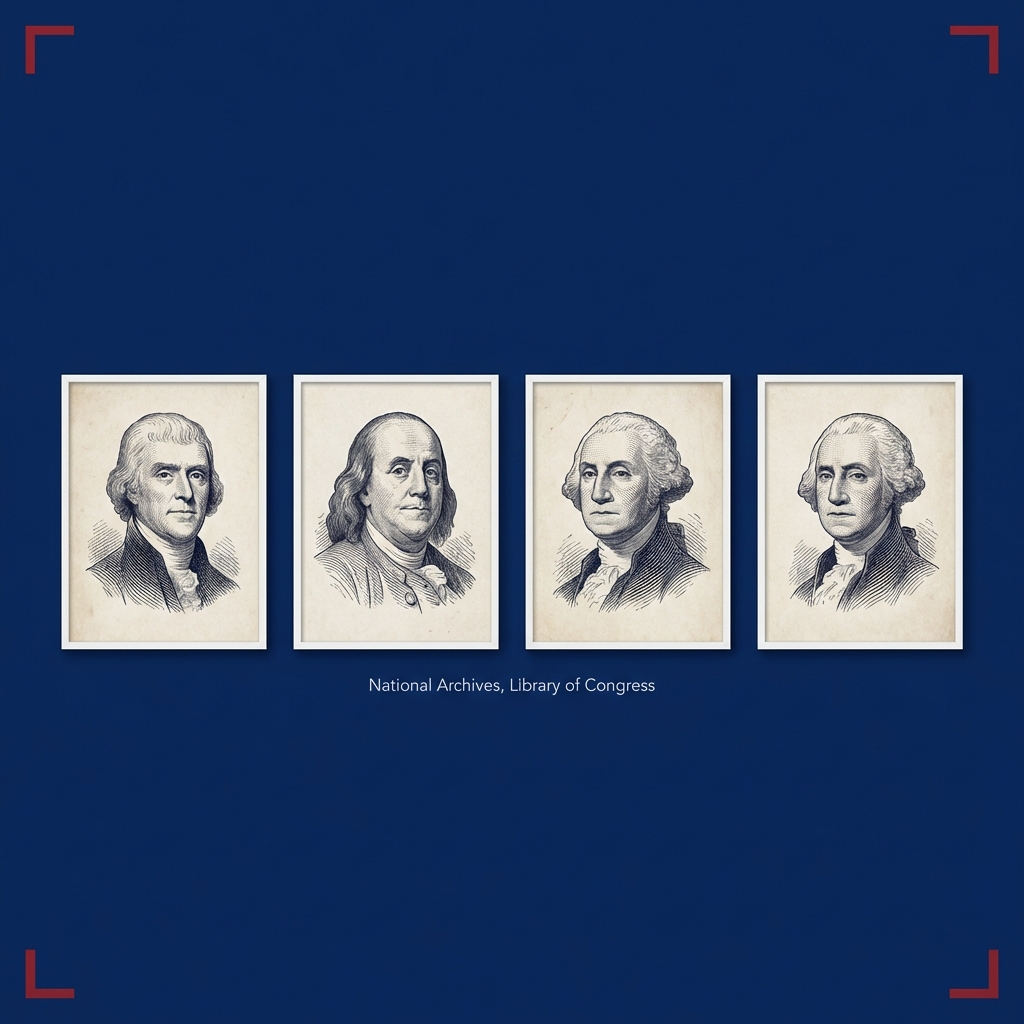
James Madison's notes from the 1787 Convention record debates that shaped mechanisms intended to limit direct majority rule. Those notes document discussions about bicameralism, indirect elections for certain offices, and other design choices; the Avalon Project transcription is a standard place to consult Madison's record Avalon Project transcription of Madison's notes.
Madison recorded how delegates negotiated compromises to balance competing interests and to structure offices with different modes of selection and terms. The notes show a practical effort to design institutions that could both reflect popular will and temper sudden changes, though they are a single account and not a verbatim transcript of every exchange.
The Convention debates recorded by Madison emphasize that design choices were often the product of bargaining among delegates with varied preferences, rather than the expression of a single uniform intention. Reading those notes helps explain why the Constitution contains mixed mechanisms rather than a single uniform rule.

How the Constitution encodes republican structures
The Constitution's text and structure codify representative features and checks that align with a republican design. The document assigns different selection methods and terms to the House, Senate, and the presidency, sets out separation of powers, and establishes a judiciary with life tenure in certain formations, all of which shape how immediate majorities can influence national policy; see the National Archives transcription for the constitutional text National Archives constitution transcription. constitutional rights
These textual features function to moderate immediate majority rule by creating multiple points where legislation and appointments must pass different processes. For example, the bicameral legislature and staggered elections mean that sudden shifts in public sentiment are less likely to produce instant wholesale changes in national law.
Primary documents and the Constitution indicate the framers designed a constitutional republic with representative institutions and checks, though some founders used democratic language in specific contexts and interpretation for modern policy is contested.
The Constitution also leaves space for popular participation: elections, the amendment process, and regular ballots are explicit ways the public influences government within the constitutional framework. Those features show a system designed to combine representative institutions with continuing popular input, rather than to exclude the people from meaningful influence.
Founders' democratic language and interpretive nuance
Several leading founders used democratic language in public letters and speeches to express principles like popular sovereignty or civic responsibility. Such phrasing can coexist with support for representative structures; the context often clarifies whether a speaker meant direct rule or robust participation within a representative system, as discussed by public scholarship at the National Constitution Center National Constitution Center discussion. See discussion in the New York Times The Founders' Intent.
This nuance matters because isolated phrases can mislead. Understanding whether a founder advocated a policy of direct popular decision-making or simply affirmed popular legitimacy requires checking the specific passage and the institutional proposals the speaker supported elsewhere.
Contemporary scholarship and debates about application today
Modern reference works and scholarly overviews describe the Founders' design as intentionally mixed: primarily republican in structure but open to democratic practices in certain areas. Encyclopedic entries and philosophy overviews provide context for how scholars interpret eighteenth century language and institutional choices; the Stanford Encyclopedia of Philosophy provides a broad framing of democratic theory relevant to these debates Stanford Encyclopedia of Philosophy entry on democracy, and Colonial Williamsburg offers accessible context on the founders' mix of republican and democratic elements Colonial Williamsburg.

Scholars disagree about how much weight to give framers' intent when considering modern referenda, direct democracy tools, or electoral reform. Some emphasize the Constitution's structural priorities, while others stress the framers' use of democratic rhetoric and the evolving nature of republican institutions; the Encyclopaedia Britannica entry on republics summarizes historical definitions that inform those debates Encyclopaedia Britannica republic overview. See also "Republican Government: Introduction" University of Chicago Press.
How to evaluate claims that 'the Founders wanted a republic, not a democracy'
To assess claims about the Founders' intent, ask whether the speaker cites primary sources such as the Federalist Papers, Madison's convention notes, or the constitutional text. Claims grounded in primary documents are stronger because they allow readers to check passages and context directly; for the Federalist Papers, consult the Library of Congress collection Library of Congress Federalist Papers collection.
Practical questions to ask include: does the claim cite a specific essay or speech, does it quote a full passage, and does it consider counterexamples where founders used different language? Distinguish between what framers wrote and how later scholars interpret those texts.
Common errors and misunderstandings to avoid
A common error is overreading single phrases. Quoting isolated words such as 'democracy' without situating them can misrepresent the speaker's institutional proposals. Context from surrounding passages or related writings often changes meaning and clarifies the intent behind a word choice, as the Federalist corpus demonstrates Library of Congress Federalist Papers collection.
Another mistake is equating eighteenth century usage directly with modern political vocabulary. Political terms evolve; using a phrase from the 1780s to resolve twenty first century choices about referenda or ballot initiatives requires additional argument, not just citation of a phrase or slogan.
Practical examples and scenarios: referenda, direct democracy, and representative checks
Consider a state referendum that would implement a policy contrary to federal statutory preferences. At the state level, direct measures may change local law quickly, but federal constitutional constraints and separation of powers can limit how such state changes interact with national policy, based on how the Constitution assigns powers and limits actions; the National Archives constitution transcription helps explain those constraints National Archives constitution transcription.
Illustrative scenario: a popular state initiative enacts a tax change. The state can implement the change under its own law, but federal constitutional provisions or interstate commerce considerations could limit certain kinds of state action. These scenarios show how representative institutions and direct democracy tools can operate in parallel, sometimes complementing one another and sometimes producing legal tension.

What this means for voters and civic discussion today
For voters, the historical evidence suggests asking candidates how they balance representative institutions with direct civic measures. Encourage candidates to cite primary sources when they invoke the framers and to explain how eighteenth century designs relate to modern proposals, since scholarly interpretation varies and context matters; see the Stanford Encyclopedia of Philosophy for framing of contemporary theory Stanford Encyclopedia of Philosophy entry on democracy. Ask candidates.
Voters can use three simple steps: consult primary sources, read reputable secondary summaries, and ask candidates for concrete explanations rather than slogans. This approach helps translate historical understanding into informed civic choices without prescribing particular political positions. For reputable secondary summaries see news and analysis.
Finding and citing primary sources on this question
The main primary repositories are the Library of Congress for the Federalist Papers, the Avalon Project at Yale for Madison's notes, and the National Archives for the Constitution. These repositories provide reliable transcriptions that are appropriate starting points for citation and comparison Library of Congress Federalist Papers collection and the site's hub on constitutional rights.
When citing, include the specific essay number, date, and a clear reference to the passage. For Madison's notes, reference the day or section in the Avalon Project transcription so readers can locate the debate and consider surrounding exchanges.
Conclusion: a cautious, source-based answer
The primary sources and the constitutional text show a design that favors representative institutions and institutional checks, reflecting a republican structure in the framing documents and many framers' writings. This conclusion is supported by textual evidence in the Constitution and by the arguments in the Federalist Papers and Madison's notes.
At the same time, several founders employed democratic language in contexts that supported popular participation, so the record is nuanced rather than uniformly one thing. Applying eighteenth century intent to modern reforms is interpretive and requires careful argument that connects historical texts to present day institutions.
Yes, some founders used the term 'democracy' in specific contexts, but usage varied and often referred to popular legitimacy rather than an endorsement of direct majority rule.
The Constitution structures representative institutions and federal limits, but it does not uniformly prohibit forms of direct democracy at state levels; constitutional provisions can nonetheless constrain some actions.
Start with the Federalist Papers at the Library of Congress, Madison's notes at the Avalon Project, and the Constitution transcription at the National Archives.
References
- https://www.archives.gov/founding-docs/constitution-transcript
- https://www.loc.gov/collections/federalist-papers/about/
- https://avalon.law.yale.edu/18th_century/debates.asp
- https://constitutioncenter.org/blog/did-the-founders-want-a-democracy-or-a-republic
- https://www.nytimes.com/2016/01/17/opinion/sunday/the-founders-intent.html
- https://plato.stanford.edu/entries/democracy/
- https://www.colonialwilliamsburg.org/discover/civics/was-the-united-states-founded-as-a-republic-or-a-democracy/
- https://www.britannica.com/topic/republic-government
- https://michaelcarbonara.com/contact/
- https://press-pubs.uchicago.edu/founders/documents/v1ch4I.html
- https://michaelcarbonara.com/michael-carbonara-launches-campaign-for-congress/
- https://michaelcarbonara.com/news/
- https://michaelcarbonara.com/constitutional-rights/